Why ChatGPT is Terrible at Meal Planning (And How Specialized AI Fixes It)
ChatGPT fails at meal planning because it lacks physical inventory awareness, hallucinates nutritional calculations, and cannot interact with real kitchen tools. Specialized AI meal planners like NoChefAI ground their generative models in verified USDA database lookups and live pantry inventories, guaranteeing accurate macros and realistic cooking steps.
We have all tried it. You open ChatGPT, stare at the blinking prompt box, and type:
"Create a 7-day high-protein, low-carb meal plan that uses the chicken thighs and spinach in my fridge, hits 150g protein daily, and takes under 25 minutes to cook."
Ten seconds later, the chatbot generates a beautifully formatted, articulate response. You feel like a high-tech biohacking mastermind.
And then you actually step into your kitchen to cook it.
The Hallucination Problem in Culinary AI
Generic Large Language Models (LLMs) like GPT-4o, Claude 3.5 Sonnet, and Google Gemini are brilliant at linguistic synthesis. But they do not possess spatial physical awareness or inventory memory.
- Phantom Ingredients: You explicitly instructed the model that you only had chicken, spinach, and rice. Yet Step 3 blithely instructs you to "stir in 2 tablespoons of toasted pine nuts, a drizzle of white truffle oil, and fresh tarragon." Items you do not own and did not consent to buying.
- Hallucinated Nutritional Math: Large language models predict the next most likely token in a sequence; they do not perform biochemical math. If you prompt ChatGPT for a 400-calorie meal containing 50g of protein using eggs, it will confidently suggest eating 3 whole eggs (which in reality provides only 18g of protein and 210 calories).
- Nonsensical Timing:Recipes will casually tell you to "caramelize onions in 5 minutes" (a chemical impossibility that takes at least 25 minutes) or roast a whole chicken in 15 minutes.
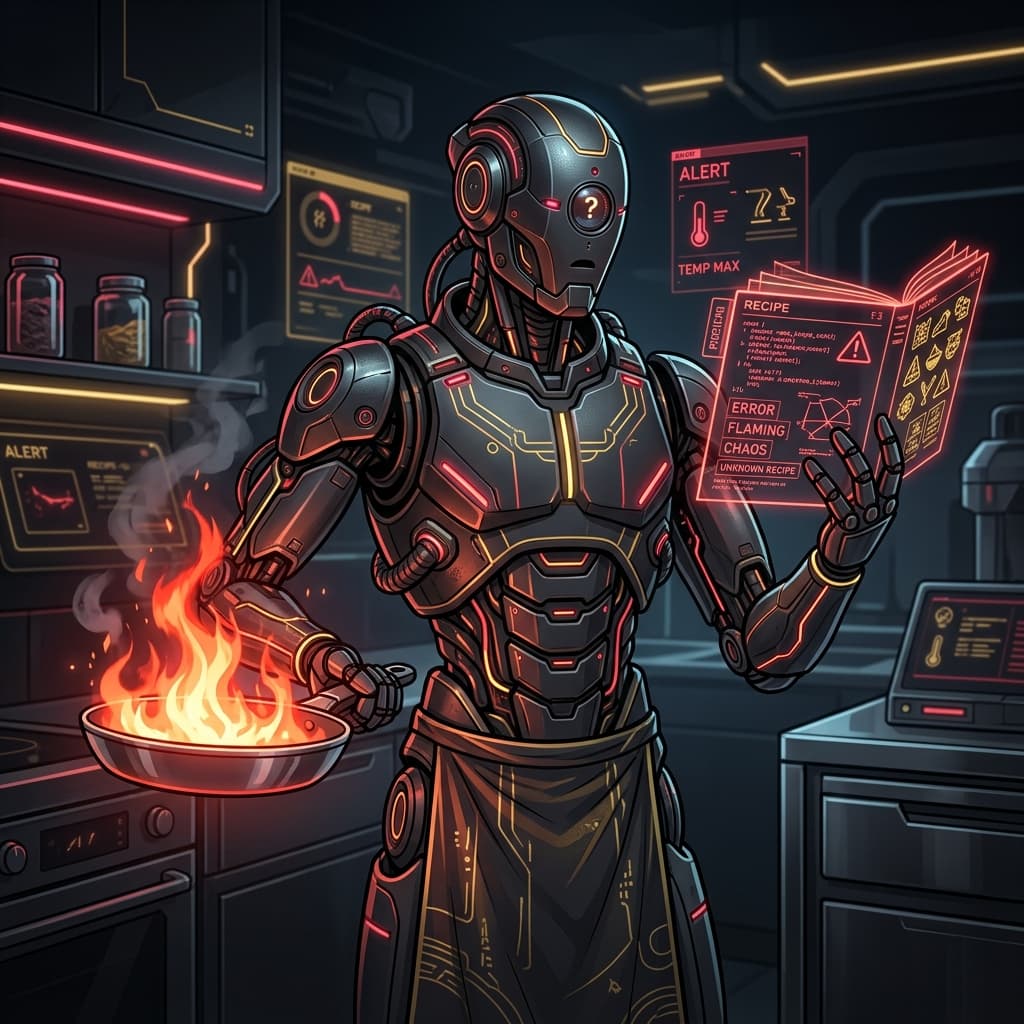
Generic chatbots lack contextual kitchen grounding, leading to phantom ingredients and impossible culinary steps.
The Disconnected Ecosystem Problem
Even when a chatbot generates a passable recipe, what happens next?
- You must copy and paste the ingredient text into Apple Notes.
- You have to manually cross-reference the notes against your refrigerator shelves to see what is missing.
- You must open a separate shopping app to write down the grocery items.
- You have to open a third app (like MyFitnessPal) and manually search for each ingredient to log your calories and macros.
You are not saving time. You are simply acting as an unpaid human API router between disconnected software applications.
How Specialized AI (NoChefAI) Solves the Problem
To make artificial intelligence useful in the kitchen, the LLM must be hard-tethered to a structured database. It cannot guess; it must know.
A specialized kitchen AI operates fundamentally differently:
- Pantry-Grounding: It scans your digital pantry inventory first. If you have chicken thighs, garlic, and broccoli, the generation engine is constrained to those exact inputs.
- USDA Verified Biochemical Data: Instead of asking an LLM to guess calories, NoChefAI programmatically pulls laboratory-verified nutritional values from the USDA FoodData Central database.
- One-Tap Continuity: Generate recipe -> One tap to push missing seasonings to your grocery list -> One tap to log final macros to your intermittent fasting log.
Experience Kitchen-Specialized AI
Stop copy-pasting chatbot recipes. Download NoChefAI free on the App Store today.
Download NoChefAI on iOS