The 7 Biological Stages of Intermittent Fasting: Autophagy, Ketosis & Cellular Repair
Intermittent fasting triggers 7 distinct physiological stages: Fed State (0–4h), Early Post-Absorptive (4–8h), Glycogen Exhaustion (8–12h), Lipolysis & Ketosis (12–16h), Autophagy Onset (16–24h), Deep Mitophagy (24–36h), and Immune Stem Cell Priming (36–48h+). Each stage initiates specific genetic repair programs.
Intermittent fasting is frequently simplified as an eating window restriction. In clinical biochemistry, however, fasting is recognized as an active biological switch between two distinct programs: growth/anabolism (governed by insulin and mTOR) and conservation/recycling (governed by AMPK and autophagy).
When food intake stops, your cells systematically shift from building new tissue to repairing, cleansing, and recycling old cellular infrastructure. For a strict hour-by-hour operational schedule, consult our fasting stages by hour timeline. Below is the deep clinical breakdown of the 7 biological stages of intermittent fasting.
The 7 Biological Stages of Fasting
Stage 1: The Fed State (Hours 0 – 4)
Directly following consumption of a meal, carbohydrates, amino acids, and lipids enter the bloodstream. Beta cells in the islets of Langerhans secrete insulin to maintain blood glucose homeostasis.
- Molecular Sensor: mTORC1 is maximally stimulated by circulating leucine, arginine, and insulin.
- Cellular Activity: Anabolic protein synthesis, glycogenesis, and de novo lipogenesis occur.
- Autophagy Status: Completely silenced; lysosomes are inactive.
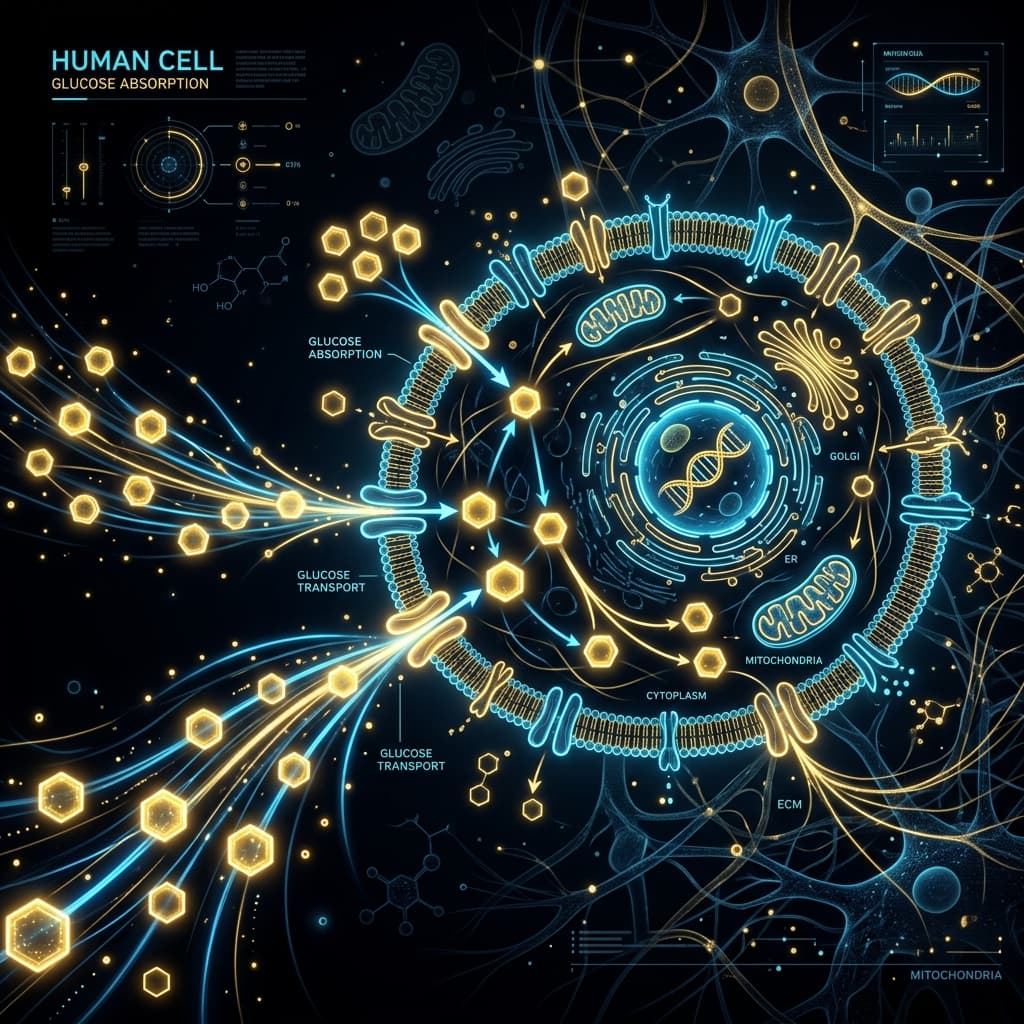
During Stage 1, cells actively absorb circulating glucose and amino acids under elevated insulin signaling.
Stage 2: Early Post-Absorptive State (Hours 4 – 8)
Intestinal absorption ceases. Circulating blood glucose begins dropping back to baseline levels (~70–90 mg/dL). In response, the alpha cells of the pancreas secrete glucagon.
Glucagon stimulates hepatocytes (liver cells) to initiate glycogenolysis—breaking down glycogen polymers into free glucose molecules to nourish the brain, red blood cells, and renal medulla.
Stage 3: Hepatic Glycogen Exhaustion (Hours 8 – 12)
The liver can store roughly 70 to 100 grams of glycogen in an adult (approximately 300–400 kcal). As the 8-to-12 hour threshold approaches, hepatic glycogen becomes critically depleted.
The body encounters a metabolic fork in the road: it must either synthesize glucose from amino acids (gluconeogenesis) or unlock stored lipid reserves. The enzyme AMPK starts sensing a rising AMP-to-ATP ratio, sounding the initial alert that cellular energy reserves are low.
Stage 4: Metabolic Switching & Ketosis (Hours 12 – 16)
As insulin drops to baseline fasting levels, the suppression on hormone-sensitive lipase (HSL) is lifted. Adipose tissue begins releasing long-chain free fatty acids into portal circulation. (Learn more about intermittent fasting fat burning stages).
In the mitochondria of hepatocytes, these fatty acids undergo beta-oxidation, producing acetyl-CoA that condenses into ketone bodies: acetoacetate and beta-hydroxybutyrate (BHB). Ketones pass the blood-brain barrier, providing up to 60% of the brain's energetic needs with lower reactive oxygen species (ROS) production than glucose.
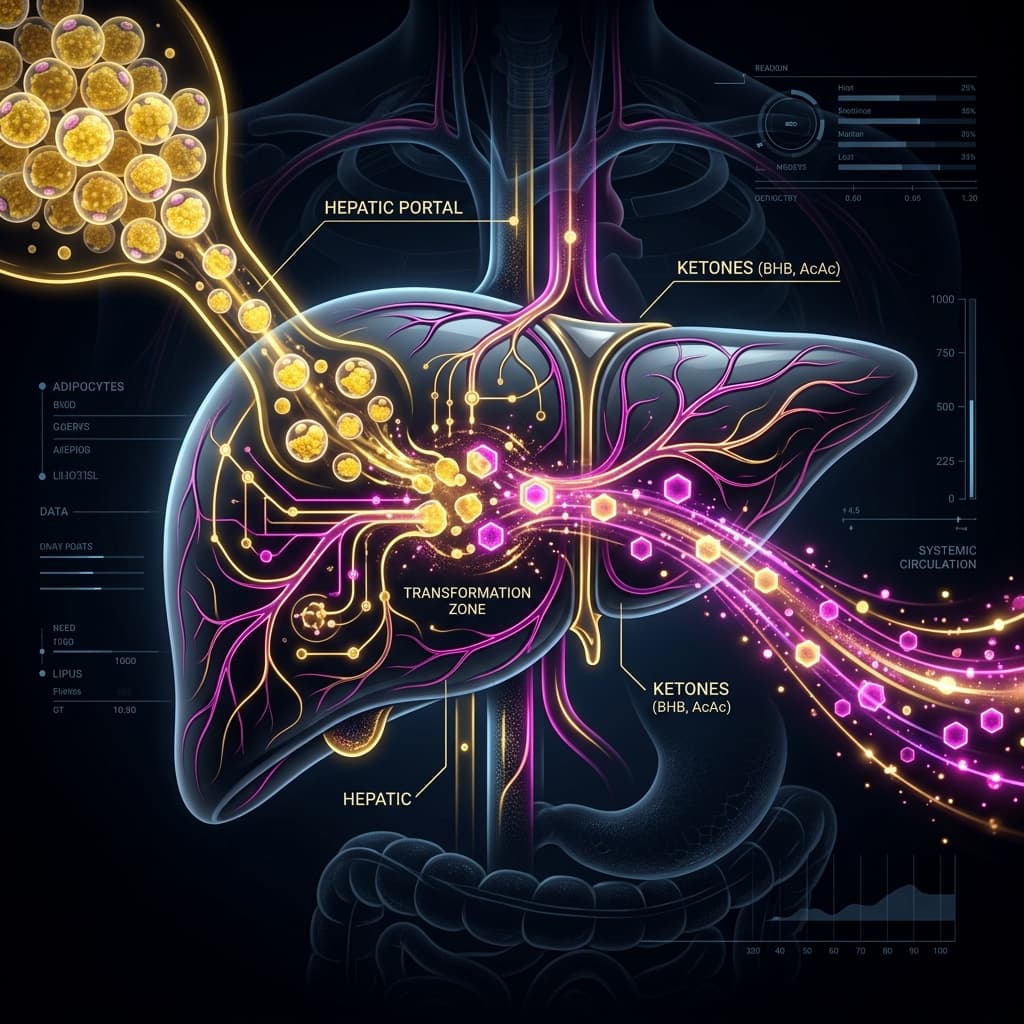
Stage 4 triggers hepatic ketogenesis, shifting cellular metabolism from glucose to high-efficiency ketone bodies.
Stage 5: Autophagy Induction (Hours 16 – 24)
At hour 16 to 18, cellular nutrient scarcity reaches the threshold required to activate macroautophagy. The 2016 Nobel Prize in Physiology or Medicine was awarded to Dr. Yoshinori Ohsumi for unraveling these exact molecular mechanisms.
- Vesicle Nucleation: The ULK1/2 kinase complex is disinhibited as mTOR unbinds, recruiting Class III PI3K complex I to form an isolation membrane (phagophore).
- Target Sequestration: The autophagosome engulfs aggregated ubiquitinated proteins, dysfunctional ribosomes, and foreign intracellular pathogens.
- Lysosomal Digestion: The autophagosome fuses with an acid-hydrolase-filled lysosome, breaking down captured cellular waste into basic amino acids and fatty acids for survival reuse.
What Happens to Your Body During a Fast?
Drag the slider or click a protocol to see how blood sugar, fat burn, and cellular autophagy evolve hour by hour based on metabolic science.
The metabolic switch flips. Liver glycogen is largely exhausted. Adipocytes release free fatty acids into circulation, and the liver initiates beta-oxidation to produce ketones.
Stage 6: Deep Mitophagy & Inflammatory Quenching (Hours 24 – 36)
Beyond general protein clearance, extended fasts trigger mitophagy—the selective elimination of dysfunctional mitochondria that leak excessive free radicals.
The PINK1-Parkin signaling pathway tags depolarized mitochondrial membranes, directing them into autophagosomes. At the same time, systemic levels of pro-inflammatory cytokines—including tumor necrosis factor alpha (TNF-α) and interleukin-6 (IL-6)—drop substantially, creating a profound anti-inflammatory systemic environment.
Stage 7: Stem Cell Activation & Immune Rejuvenation (Hours 36 – 48+)
Pioneering research conducted by Dr. Valter Longo and colleagues at USC established that prolonged fasting past 36–48 hours triggers a survival mechanism in circulating white blood cells. Old, senescent immune cells are degraded through apoptosis.
When food is reintroduced (refeeding), dormant hematopoietic stem cells in the bone marrow are stimulated to regenerate brand new, highly functional white blood cells—effectively rejuvenating the immune system.
Frequently Asked Questions
Do I need to do a 48-hour fast to benefit from intermittent fasting?
No. Daily protocols like 16:8 or 18:6 consistently activate stages 3, 4, and 5—providing steady fat oxidation, ketone fuel, and moderate autophagic turnover without the metabolic stress or electrolyte management challenges of prolonged multi-day fasts.
What breaks the biological stages of fasting?
Any caloric intake containing glucose, protein, or amino acids (such as BCAAs or bone broth) stimulates insulin and amino acid sensors, instantly activating mTOR and halting stages 4 through 7. Pure water, unflavored sparkling water, and black coffee/tea do not interrupt these stages.
Track Your Biological Stages Live on iOS
Monitor real-time metabolic transitions, estimated fat burned, and autophagy on your iPhone.
Download NoChefAI on the App Store